Showing posts with label Data Warehouse Big Data. Show all posts

Friday, June 9, 2023

Introducing Data Transforms: Built in Data Integration for Autonomous Database

Data Transforms is a built-in data integration tool for Autonomous Database users. Accessible from Database Actions, it is a simple-to-use, drag-and-drop, no-code tool to load and transform data from heterogenous sources to the Autonomous Database. It can be used for all data integration needs such as building data warehouses and feeding analytics applications.

Data Transforms is based on Oracle Data Integrator and uses the same Extract-Load-Transform (ELT) methodology that has been proven as a mature and high-performance data integration architecture in thousands of customers both on premises and on Oracle Cloud Infrastructure.

In this blog post I will show you how to transform your data with little effort using this tool.

Invoking Data Transforms


Log into the Autonomous Database and navigate to Database Actions page. The Data Transforms card is under Data Studio section.

This tool is always visible for the ADMIN user.  Other users require the following user roles to be enabled.

DWROLE

DATA_TRANSFORMS_USER

Note: Make sure to check both Granted and Default boxes, as shown below.

Oracle Database Career, Oracle Database Skills, Oracle Database Jobs, Oracle Database Prep, Oracle Database Preparation, Oracle Database Prep, Oracle Database Preparation

Now log in as this database user and navigate to Database Actions page.

Oracle Database Career, Oracle Database Skills, Oracle Database Jobs, Oracle Database Prep, Oracle Database Preparation, Oracle Database Prep, Oracle Database Preparation

After you click on the Data Transforms card, you will need to re-enter the database username and password.
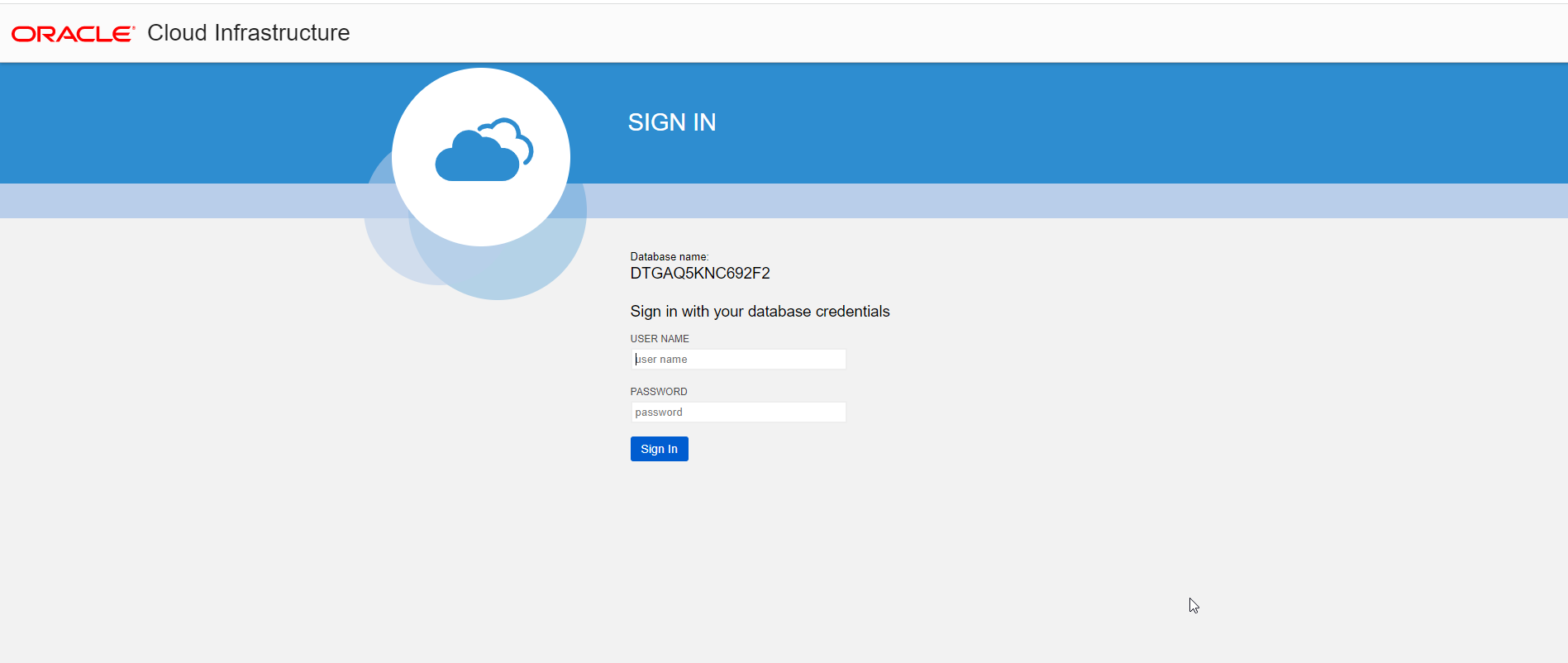
Oracle Database Career, Oracle Database Skills, Oracle Database Jobs, Oracle Database Prep, Oracle Database Preparation, Oracle Database Prep, Oracle Database Preparation

It takes around 1-2 minutes for the service to come up. It takes a little longer for the first time and subsequent startup times are shorter.

Oracle Database Career, Oracle Database Skills, Oracle Database Jobs, Oracle Database Prep, Oracle Database Preparation, Oracle Database Prep, Oracle Database Preparation

Once deployed, the home screen looks like this.

Oracle Database Career, Oracle Database Skills, Oracle Database Jobs, Oracle Database Prep, Oracle Database Preparation, Oracle Database Prep, Oracle Database Preparation

Data Transforms is an Extract-Load-Transform (E-L-T) tool. You can use it for

◉ Extract and Load (E-L) - with the “Load Data” wizard.
◉ Extract, Load and Transform (E-L-T) or simply Transform (T) - with the “Transform Data” wizard.

This blog post focuses on the data transformation use case. The data load use case without transformation is described in this blog post.

Creating connections


Data Transforms supports connections to a wide variety of sources. To load data from any of these sources, we first need to create a connection.

From the left side menu, click on “Connections”. It will show any existing connections, and you can create new connections.

For the first-time user, there is already a template connection to your Autonomous Database. Complete the connection details by editing the connection to provide username and password.

Oracle Database Career, Oracle Database Skills, Oracle Database Jobs, Oracle Database Prep, Oracle Database Preparation, Oracle Database Prep, Oracle Database Preparation

Test the connection and update it.

Oracle Database Career, Oracle Database Skills, Oracle Database Jobs, Oracle Database Prep, Oracle Database Preparation, Oracle Database Prep, Oracle Database Preparation

You can also create new connections to load data from other sources. Note that new connections are categorized in Databases, Applications and Services. Select the appropriate connection type in the category, and then provide connection parameters (such as username and password). Connection parameters are specific to the connection type. Test it for successful connection and save it.

In this blog post we will use the connection to your Autonomous Database and transform data which is already there.

Transforming data


To transform data, you need to create Data Flow jobs. The “Transform Data” wizard makes this task easier and is covered in this blog post. Advanced users can manually create a project and create data flows in the project.

From the home screen, click on the “Transform Data” button. Provide a name and description for the data flow. You can create a new project if you don’t have one already. A project is a collection of integration jobs for better manageability. Click “Next”.

Oracle Database Career, Oracle Database Skills, Oracle Database Jobs, Oracle Database Prep, Oracle Database Preparation, Oracle Database Prep, Oracle Database Preparation

Select the connection to your Autonomous Database and schema (database user). For simplicity, we will use % for the mask that will retrieve all the table definitions from the schema. You can optionally use the mask to restrict tables of interest. Click “Save”.

Oracle Database Career, Oracle Database Skills, Oracle Database Jobs, Oracle Database Prep, Oracle Database Preparation, Oracle Database Prep, Oracle Database Preparation

This will take you to the Data Flow editor. On the left side you will see the tables in your Autonomous Database. First you will see the status of “Importing Data Entities” against your schema name. Data Transforms is importing the table definitions in the background. This may take a few minutes.

Oracle Database Career, Oracle Database Skills, Oracle Database Jobs, Oracle Database Prep, Oracle Database Preparation, Oracle Database Prep, Oracle Database Preparation

Soon, the left side of the data flow editor will show all the tables. You can also search for specific tables if the list is long.

Oracle Database Career, Oracle Database Skills, Oracle Database Jobs, Oracle Database Prep, Oracle Database Preparation, Oracle Database Prep, Oracle Database Preparation

Now, you can use the editor to define any sequence of transforms to define your data flow. The transforms tools are available on the top of the page under various categories. You will simply drag the appropriate tool to the canvas, configure properties and link transformations in a flow.

In the data flow shown below, the following transformations are defined:

1. MOVIE_SALES_2020 table is used as a source
2. Rows filtered for 2nd quarter
3. DAY column is cleansed to convert to title case
4. Load results into a new table called MOVIE_SALES_2020_Q2.

Configure the data flow to load the target table in various modes, such as:

◉ Drop/create and load
◉ Truncate and load
◉ Append
◉ Incremental load
 
This blog post does not go into details of how to build a data flow job.

Oracle Database Career, Oracle Database Skills, Oracle Database Jobs, Oracle Database Prep, Oracle Database Preparation, Oracle Database Prep, Oracle Database Preparation

Save and execute the data flow from this editor itself to load your target table with the transformed data immediately. Alternatively, create a schedule to run this job at a specific time and frequency.

Advanced users can also combine data flows to create workflows that can be executed or scheduled. All these job execution details are logged and available under the Jobs menu. The following screenshot shows the job for the data flow executed earlier.

Oracle Database Career, Oracle Database Skills, Oracle Database Jobs, Oracle Database Prep, Oracle Database Preparation, Oracle Database Prep, Oracle Database Preparation

Click on the job to get execution details for each step. These include rows processed as well as the executed SQL for debugging purposes.

Oracle Database Career, Oracle Database Skills, Oracle Database Jobs, Oracle Database Prep, Oracle Database Preparation, Oracle Database Prep, Oracle Database Preparation

Summary

Data Transforms is a versatile and heterogenous data integration tool built into the Autonomous Database. Data Transforms makes it easy to transform data already in your Autonomous Database. You can also load and transform data from other sources. There is no need to write SQL or use any external data integration tool for your data transformation needs.

Source: oracle.com

Sunday, August 29, 2021

Difference Between Database and Data Warehouse

Oracle Database, Data Warehouse, Oracle Database Tutorial and Material, Oracle Database Exam Prep, Oracle Database Certification, Oracle Database Career

Database vs Data Warehouse

The basis for the difference between a database and a data warehouse arises from the fact that a data warehouse is a type of database that is used for data analysis. A database is an organized collection of data stored on a computer system. Information about students, teachers, and classes in a school stored in table fashion is an example for a database. As databases support large amount of data, concurrent processing, and efficient operations, they are widely used. But, as database is often subjected to updates, it not possible to have a proper view to do an analysis. Hence, a data warehouse technique must be followed to achieve this. A data warehouse is a special type of database, but which is optimized for querying and analysis. As a data warehouse extracts data from various sources and reports, it does so that decisions can be reached by analysis. Let us look at them and the difference between them in more detail here.

What is a Database?

A database is a collection of related data stored on a computer system. Usually, a database is organized and its data is related. For example, a school database would have several tables as teachers, students, and classes where each table would have records that specify information about each item. Here, we can see the structure is organized based on certain criteria and there are relationships between the tables as they all belong to the same school. A database has numerous uses in the computer world. Therefore, it is so famous that it is found very abundantly in various applications. The basic advantage of a database is that a database can store a huge amount of data in a very less space while providing very fast and easy operations on data.

A database often involves a software system called Database Management System (DBMS), which is responsible for storing and managing the data in the database. MySQL, Oracle, Microsoft SQL Server are some well-known database management systems. When creating a database on the computer, first step is to create a logical structure of how data is stored, organized, and manipulated based on the description we have for the system. This is called as database modeling. There are various modeling techniques such as relational model, network model, object oriented model, and hierarchical model, but the most famous one is the relational model. Even MySQL, which is one of the most used database management systems, uses the relational model to store its databases.

Oracle Database, Data Warehouse, Oracle Database Tutorial and Material, Oracle Database Exam Prep, Oracle Database Certification, Oracle Database Career
Database Models

A database supports four functions that is given by the acronym CRUD that refers to create, read, update, and delete. In SQL, create lets you insert data to a table. Read lets you query what you want to retrieve and update lets you modify data when it is necessary. Delete lets you delete data when they must be done so.

What is a Data Warehouse?


A data warehouse is a special type of database used for analysis of data. A general database is usually used for transaction processing, and hence, it is not optimized for analysis and reporting. But a data warehouse is specially designed and optimized for analysis tasks. A data warehouse usually fetches data from the history of a transaction processing system while various other sources also can contribute. After extracting data from various sources, they are reported in a generalized view. A transaction processing system involves lots of operations per second and hence data is often updated making it difficult for someone to view it at a certain point and analyze it to reach a decision. A data warehouse exactly enables this by extracting information and reporting it in a neat fashion such that one can analyze it to reach a decision.

Oracle Database, Data Warehouse, Oracle Database Tutorial and Material, Oracle Database Exam Prep, Oracle Database Certification, Oracle Database Career

What is the difference between Database and Data Warehouse?


A database is an organized collection of data. A data warehouse is a special type of database, which is optimized for querying and reporting rather than transaction processing. So following comparison is done about a general database and a data warehouse.

• A database stores current data while a data warehouse stores historical data.

• A database often changes due to frequent updates done on it, and hence, it cannot be used for analysis or reaching decision. A data warehouse extracts data and reports them to analyze and reach decisions.

• A general database is used for Online Transactional Processing while a data warehouse is used for Online Analytical Processing.

• Tables in a database are normalized to achieve efficient storage while a data warehouse is usually demoralized to achieve faster querying.

• Analytical queries are much faster on a data warehouse than on a database.

• A database contains highly detailed data while a data warehouse contains summarized data.

• A database provides a detailed relational view while a data warehouse provides a summarized multidimensional view.

• A database can do a lot of concurrent transactions while a data warehouse is not designed for such tasks.

Source: differencebetween.com

Saturday, July 10, 2021

6 Benefits of a Cloud Data Warehouse

Oracle Cloud Data Warehouse, Oracle Database Preparation, Oracle Database Exam Prep, Oracle Database Learning, Database Career

Let’s explore these key topics one by one.

More Info: 1Z0-888: MySQL 5.7 Database Administrator

Question 1 - Do you even want a data warehouse in the cloud?

Of course you do! Look at how fast your data warehouse is growing. Look at the growing number of requests building up for new data warehouse projects, new data discovery sandboxes, new departmental marts, faster query response times, etc. Every IT department is looking for a silver bullet that can magically help them meet the growing demands for data access coming their business units. That silver bullet would be cloud.

Question 2: What can you expect from a cloud data warehouse and what are the key benefits? There are many, but we’ve identified the top six benefits for you.

Data Warehouse Cloud Benefit #1: Lower Costs With Elasticity

The biggest reason most people move to a data warehouse in the cloud is cost. Storing data on-premise, in your own data center, can get very expensive. And expanding your data footprint often makes it harder to support all of your ever-expanding analytical needs.

Why? Well with an on-premise data warehouse, you can’t independently scale compute and storage - at least not that quickly or easily. Typically, if you need more storage the compute will come with it and you end up having to pay for both.

In addition, you need to purchase as much compute as you need for peak times. So if you’re a retail company worried about how much compute you need to handle Black Friday, well, tough luck—you’re stuck with that much compute for the whole year.  

Fortunately, it doesn’t have to be that way. 

With the best kind of data warehouse, your system can instantly and flexibly scale to deliver as much or as little compute is necessary, whenever it is that you need it. And, because compute and storage are separate, you only need to purchase what’s essential. Lastly, you also don’t have as many upfront costs—hardware, server rooms, networking, adding extra staff, etc.

Data Warehouse Cloud Benefit #2: Quick to Deploy

In the past, IT teams had to estimate how much storage and compute power would be necessary for their line of business teams—sometimes three years in advance. Getting this information incorrect would mean buying hardware they didn’t need, or facing complaints if there was a lack of storage.

Today, this complicated, detailed planning-and-estimation process isn’t necessary. With the cloud, business users can build their own data warehouse, data mart, or sandbox in only minutes, at any time (night or day). Having a data warehouse in the cloud allows organizations to pay for only the resources they need—when they need it.

In addition, Oracle’s cloud makes it quicker and easier to roll out new data warehouse projects such as data discovery sandboxes. IT and business teams can develop and/or prototype new services and products without spending large sums of money on infrastructure.

Data Warehouse Cloud Benefit #3: Grow Your Capabilities

Having a data warehouse in the cloud improves the overall value of the data warehouse. It means that business intelligence and other applications can deliver faster, smarter insights to the business since the availability, scalability and performance are better.

As Penny Avril, VP of Product Management said: “The value of the business is driven by data, and by the usage of the data. For many companies, the data is the only real capital they have. Oracle is making it easier for the C-level to manage and use that data. That should help the bottom line.”

With a data warehouse in the cloud, you can engage in the full spectrum of data warehousing from business analytics, data integration, IoT, and more as a complete, integrated solution.

Data Warehouse Cloud Benefit #4: Self-Service Data Warehousing

Self-service is only truly possible if you have a self-driving database. Just as the cloud data warehouse has many benefits, a self-driving, autonomous data warehouse offers even more benefits. Essentially, you don't really have to worry about managing the data warehouse anymore. 

And that means you can benefit from fully automated management, fully automated patching, and upgrades. It means as business user, you don’t need IT to spin up a new data mart for you. You simply log into the cloud and provision a new data warehouse yourself, in minutes.

Data is more available and accessible than ever before.

This allows IT teams to focus attention and resources on more strategic aspects of providing value to the business. But this doesn’t mean that DBAs will be out of work—they still have to manage how applications connect to the data warehouse and how developers use the in-database features and functions within their application code.

Data Warehouse Cloud Benefit #5: More Secure Data

In the past, people were convinced that on-premises data warehouses were more secure. But in the same way that they now trust digital copies more than physical paper copies, some are beginning to see a data warehouse in the cloud as more secure than an on-premises system.

But obviously, it all depends on the database company. So choose a company that has a business model that relies on data security and encryption. Preferably, that company should have over four decades of experience with entire departments to protecting your most valuable asset ... Hmmm, who could that be? 

Just as an aside, with our self-driving database, the Autonomous Data Warehouse, we have strong data encryption switched on by default to ensure your data is fully protected.

Data Warehouse Cloud Benefit #6: The Cloud Itself

A self-driving database makes everything easier: it takes care of much of the dull but highly valuable work that most people don’t want to do. A self-driving database will help you gain even more ability and capability in the cloud.

Oracle Cloud Data Warehouse, Oracle Database Preparation, Oracle Database Exam Prep, Oracle Database Learning, Database Career

For many customers, adopting a data warehouse is just one step on a multi-step journey. You need to make sure that your cloud provider offers a complete path to the cloud that encompasses integrated IaaS, PaaS, and SaaS solutions.

You can simplify your IT infrastructure and minimize capital investments by utilizing your cloud’s services for infrastructure, data management, applications, and business intelligence.

When it comes to choosing a cloud, make sure the one you pick allows for flexible deployment models, enabling you to seamlessly migrate your IT workloads from an on-premises data center to the cloud and back again.

Source: oracle.com